
Originally published in Waikato Times, Monday 19 January 2026.
By Mike Mather.
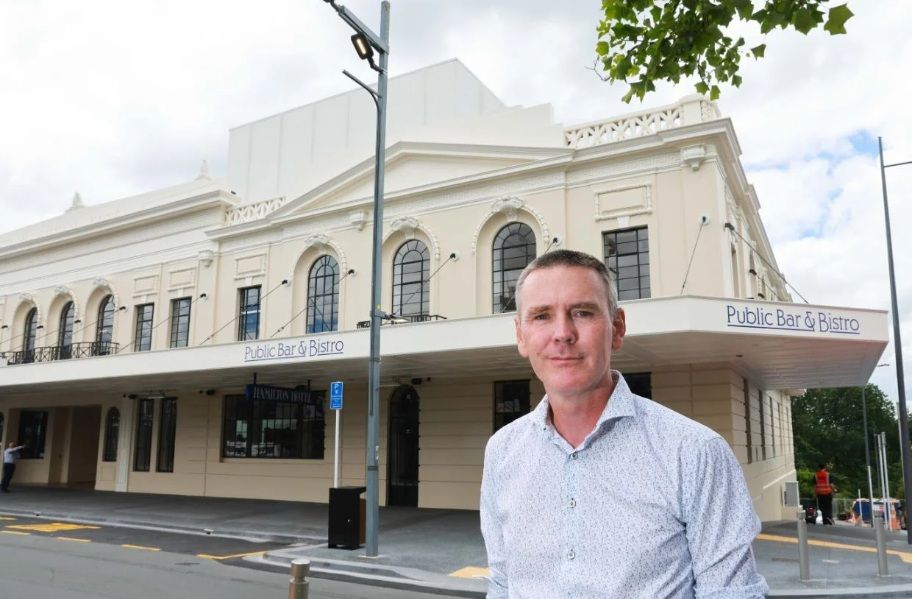
Graeme Ward is the BNZ Theatre's project management lead at RDT Pacific, who has been involved with the theatre since its inception in 2016. PHOTO: Mark Taylor / WAIKATO TIMES.
If you were to think of the BNZ Theatre as a spacecraft counting down to lift-off before rocketing away to the stars, then Graeme Ward’s office at RDT Pacific is definitely Ground Control.
The project management firm’s Hamilton office, overlooking Garden Place, has effectively been the nerve centre for the city’s $80 million theatre, just up the road.
For Ward, the theatre represents a decade of work - work that began not long after the Hamilton City Council unexpectedly shut down Founders Theatre in early 2016, over grave safety concerns involving that building’s dilapidated flying system and its ability to survive a decent earthquake.
At the time he was the director of infrastructure and assets at Wintec. One day he received a call “completely out of the blue” from then-Momentum Waikato chairman Leonard Gardner, who was putting together a governance panel with the goal of establishing a new theatre for the city.
“It sounded like something really interesting to be involved with. I did not initially realise at that point just what a major job I had signed up for.”
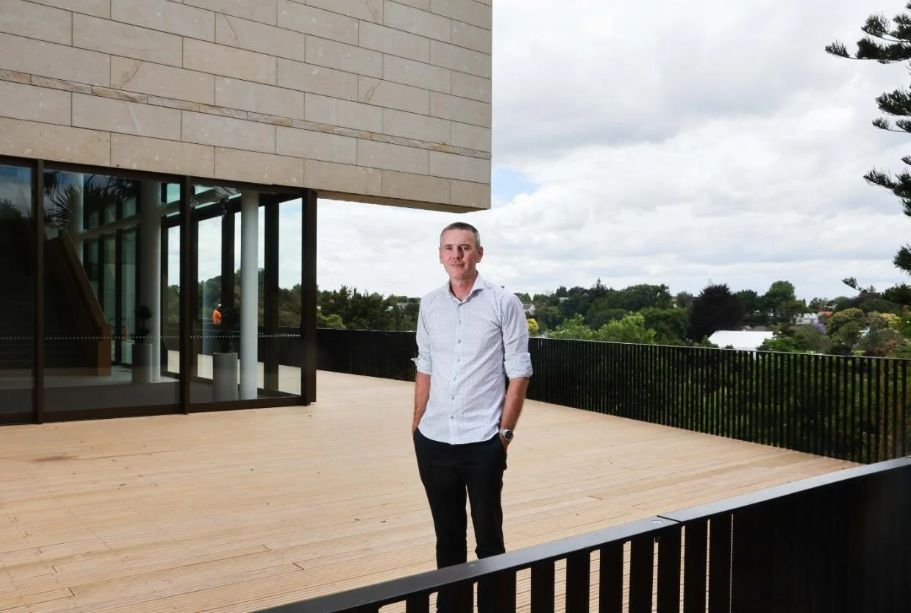
There are numerous aspects of which Graeme Ward is extremely proud, and the Hinuera stone cladding of the theatre’s exterior and the decking are among them. PHOTO: Mark Taylor / WAIKATO TIMES.
Ward said he had vivid memories of “the early elemental stages of the process ... The mission was to pull together a project brief and find a site”.
He recalls the governance panel members spending “a blisteringly hot day” walking around the city investigating potential locations for the new theatre. These included the old Founders site, a car park in Knox St, and properties adjacent to the Claudelands Events Centre.
“I continued to be involved in that capacity until about six and a half years ago, when I left Wintec and joined RDT - and the theatre became a much bigger part of my daily life.”
It was a project like no other - “community-purposed, but not directly funded by the community.
“It was incredibly complex ... but in a great way. I don’t think everyone immediately foresaw what we were trying to achieve: The creation of something that could truly be described as world class.”
RDT’s role “was to put in structure and maintain project controls, and to make decisions wherever there was any ambiguity,” Ward said.
The firm was also commissioned to engage and liaise with the five Kirikiriroa hapū (sub-tribes) to ensure te ao Māori was embedded across the new theatre and its surrounds.
“If you think about everything this theatre is, including the commercial offering out the front; the way the whole thing is sitting on a side of a hill, overlooking the river; and all of the technical aspects we have worked through ... We have created something entirely unique.
“Unique” was a word that can be applied to the development [of the theatre] as well, Ward said.
“It’s a public-private partnership, in which thousands upon thousands of dollars have been donated by the community as well. There is an incredible amount of community goodwill that has flowed into this - and that’s a truly one-of-a-kind achievement as well.”
What would Ward have done differently, with the benefit of hindsight?
“Possibly some things ... There’s a million different decisions that were made during the course of this project - but I am certain there were no big wrong calls made. We played the cards we were dealt, and I think we played them pretty well.”
The Covid pandemic proved to be a major spanner in the works, and cost escalations and difficulties sourcing materials made the project much more complex than what was initially conceived.
“It has not been an easy project by any stretch of the imagination. It was very complicated in just about every way you could think of - but I think the end result will speak for itself.
“One thing I never appreciated was how service-intensive theatres are. There are models and standards that need to be adhered to ... In that part of the equation we have been wonderfully guided by [international theatre and acoustic design firm ] CharcoalBlue.
“The one area where we absolutely refused to compromise in any capacity was the auditorium. It is going to be a very special visual experience, let alone the acoustic experience.
“Going to the theatre should be an event ... and this theatre, in itself, will make it an event.”