
Originally published in Waikato Times, Monday 19 January 2026.
By Mike Mather.
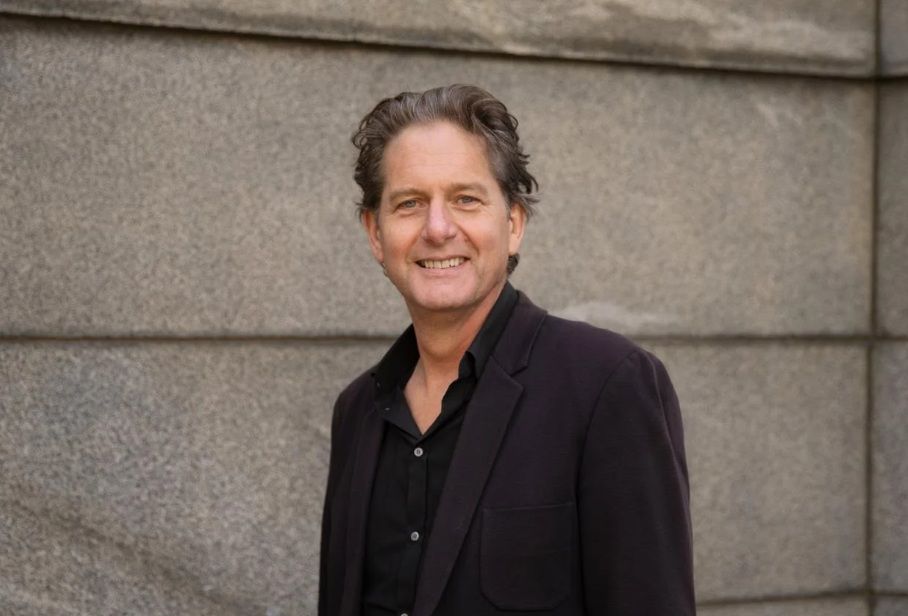
David Pugh, Jasmax's “project principal” for the BNZ Theatre says the project was one of the best he had worked on. PHOTO: Jasmax.
It’s not often that David Pugh receives a design brief from a client that is as creatively stimulating as the one he got from Momentum Waikato.
“It was incredibly aspirational ... To put it briefly, what they were seeking was, as they put it, simply ‘the best theatre in New Zealand’.”
It was 2016 and the architectural firm Jasmax had just been contracted to design what would become the BNZ Theatre.
Not long earlier the Hamilton City Council had abruptly closed down Founders Theatre due to structural safety concerns.

Some of the design concepts created by Jasmax for the new theatre are startlingly close to what has been physically manifested. IMAGE: Jasmax.
“It was at that point that Momentum saw the problem facing Hamilton as an opportunity that was waiting to be taken, and they approached the [Hamilton City] council.”
The council’s response had been inspiring as well, Pugh said.
“I’d describe it as a visionary approach, in which they effectively stepped back and said ‘Let the experts deal with it’. That’s quite extraordinary, really.”
Further inspiration came from the international theatre and acoustic design firm Charcoalblue, who provided a technical brief that envisaged a multi-purpose approach for the new facility.

The artists' concepts of the theatre created by Jasmax were updated during the course of the construction, to give people a refined view of what the finished building would look like. IMAGE: Jasmax.
“It was, in whole, much wider than the usual brief. We were asked to create a creative precinct - a place where all the community would be welcome and a part of what was happening, and a place that had really strong connections to the river.
“Charcoalblue knew that what Momentum wanted - and what they were capable of - was a full theatre, where opera, dance, ballet, unamplified orchestral music and amplified concerts could all take place.”
During the design and construction period numerous design works created by Pugh and his team were made public - and in some cases the similarity between what he foresaw and what the Fosters Construction-led team building the theatre eventually created is startling.

This Jasmax vision of what Ralph Hotere's Founders Theatre artwork would look like in the new BNZ Theatre’s foyer - in an area now known as Caiger Landing - is also very close to the end result. IMAGE: Jasmax.
“Over the years, as the project started to advance and we got a better idea of what we had to work with, there were a few different iterations of the designs ... but what we ultimately ended up with was fantastic.”
There were numerous unique, challenging aspects - not least of which was that the entire building was going to sit on the side of a riverbank, as well as the retention of the historic Hamilton Hotel façade.

This early Jasmax depiction of Embassy Park is not quite what the end result will look like. The statue of Riff Raff is in a different position, for a start. IMAGE: Jasmax.
“I’d say including that heritage element was a stroke of genius. It was a dilapidated old building, and if they had left it for another 10 years the entire thing might well have had to be demolished.
“Another element we were asked to picture was Embassy Park - a place that could be a home to street theatre events, and creativity outside of the theatre building itself.”
Possibly the element of which Pugh is proudest is the foyer area, which includes the famed artwork by Ralph Hotere that had been rescued from Founders Theatre.
“It’s at front and centre of the foyer. I love the design of the work, and how it suggests the movement of the river, which the foyer overlooks, and also the movement of the people in the theatre.”
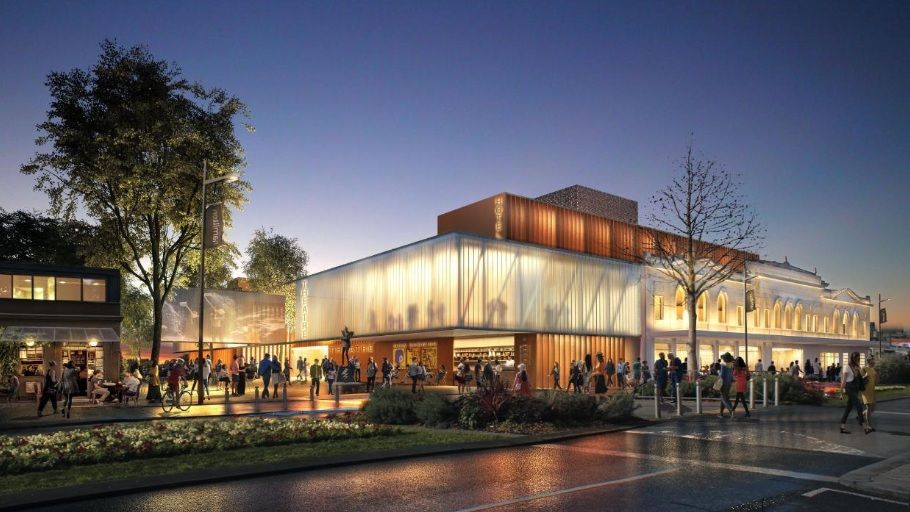
Another early Jasmax impression of what the then-named Waikato Regional Theatre could look like. IMAGE: Jasmax.
In 2018 the design of the main auditorium was increased to 1300 seats.
“That’s big for New Zealand. It was a grander plan, and that required a grander concept.
“What we wanted to do was impress upon people walking into the auditorium was that they were entering a completely different environment - a place that had a calming atmosphere, following the vibrancy of the foyer area ... It was achieved by using a primarily timber setting and elements including some very well-crafted balconies.”